By Nii B. Andrews.
Officially, the MACAAL reopened today Sunday Feb 8 to the public as part of the 1- 54 CAA Fair.
But yesterday – Saturday, a phalanx of invited guests was on hand to see yet again the superlative art practice at this unique museum of CAA.
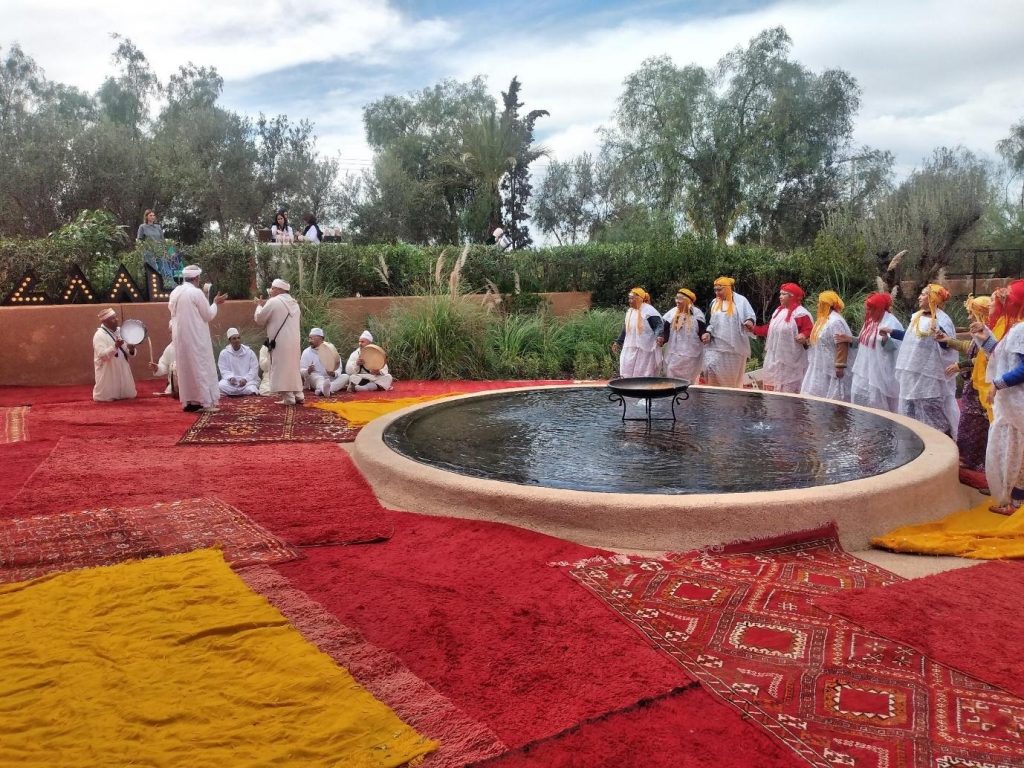
On our arrival, the extensive forecourt and driveway of the building had been completely covered in handwoven Amazigh rugs emphasizing a dignified and prestigious welcome to the invited guests; a tight and cohesive musical group provided live Amazigh traditional music.
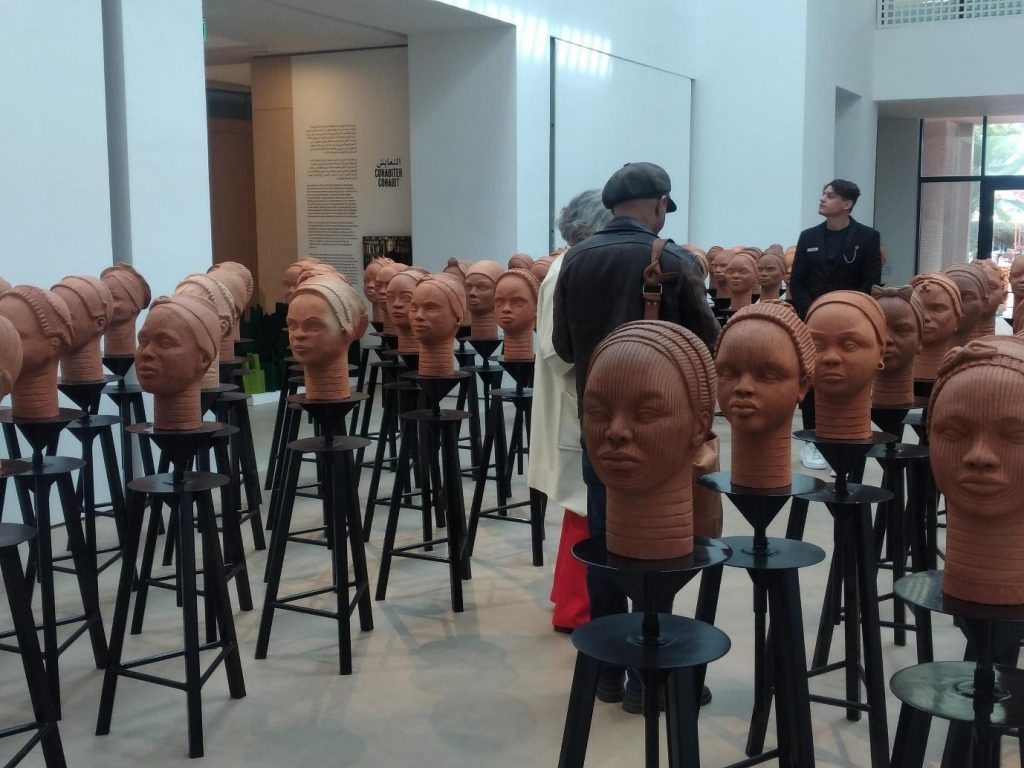
Once we were through the museum door, we were immediately confronted with a stunning collection of 108 (!)terracotta heads in a style that referenced the iconic 15th century Ife heads.
This majestic display was to remind us about the terrible set of circumstances of the still missing Chibok girls from Nigeria, “the diversity of Nigeria’s history and culture……and the challenges that we collectively face as global community”.
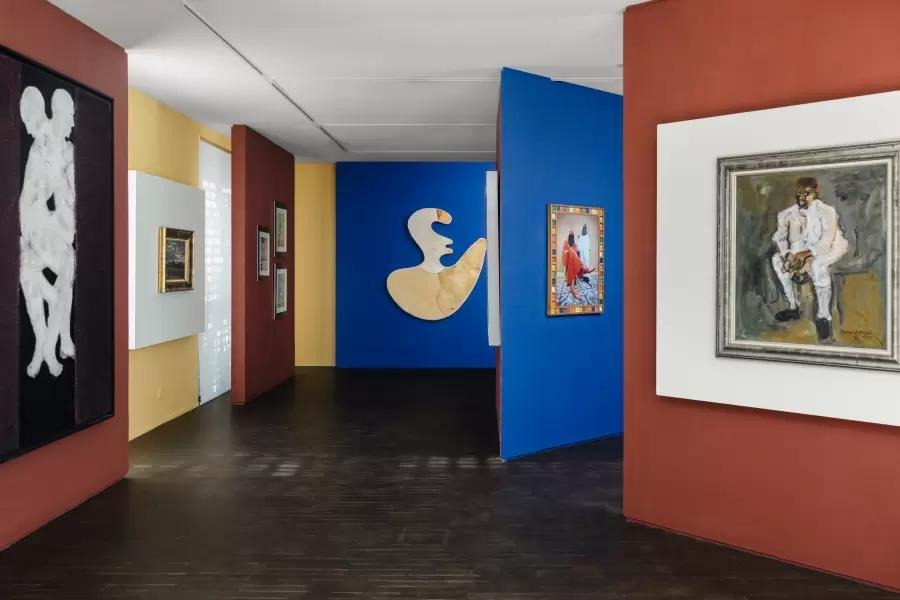
Once past the terracotta “army of remembrance” it was clearly apparent that the awesome MACAAL CAA collection had been reassembled after another thoughtful and tasteful renovation of the museum.

Nidhal Chamekh, Nos visages D, 2019
This latest exhibition in the stunning architectural space with its idyllic grounds is entitled, SEVEN CONTOURS, ONE COLLECTION.
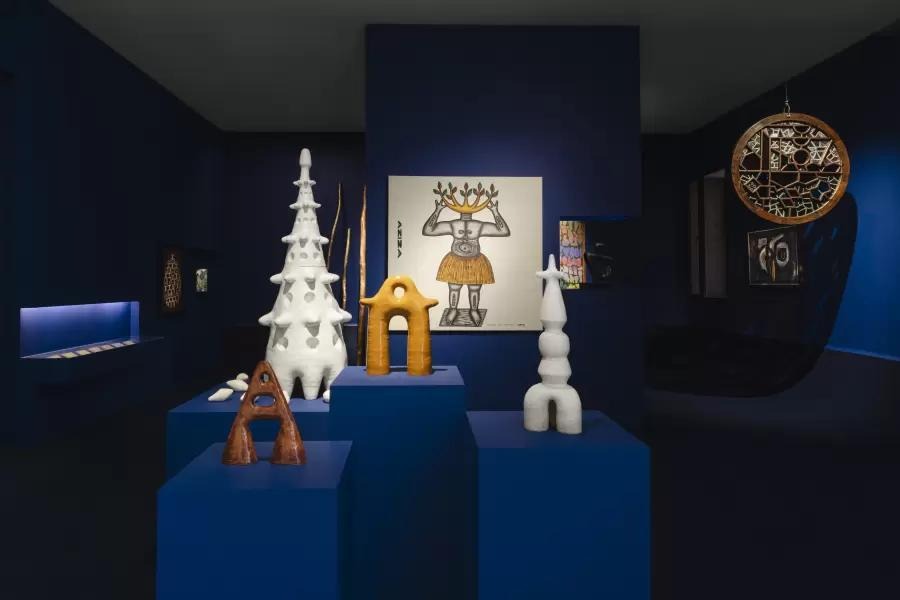
Thus the collection is shown in seven different chambers predicated on a thought provoking concept proposed by Morad Montazami and Madeleine de Colnet of Zamân Books & Curating in consonance with seven performative verbs as an exploratory handle for CAA: Decolonize, Transcribe, Initiate, Cohabit, Converge, Promise, Weave/ Connect.
Ariella Aïsha Azoulay, a professor of modern culture and media at Brown University, in Providence offers in a video clip a trenchant critique in the first chamber – Decolonize.
Here there are works from important artists such as Leila Alaoui, Sammy Baloji, Baya Mahieddine, Farid Belkahia, Hicham Benohoud, Seyni Awa Camara, Chaibia Talal.
These artists and others, in no small way confront and debunk mainstream colonial history and provide a more accurate and nuanced perspective on persistently marginalised or destroyed narratives.
Azoulay reminds us of the colonialists’ massive and insatiable plunder of objects in the 19th and 20th centuries while disingenuously promoting stereotyped and fantasised images of its inhabitants.
She prescribes that understanding the decolonisation of museums cannot occur without the decolonisation of the world; these works contribute to the global effort of renewing imaginations.
It is in this room that a drawing by Nidhal Chamekh, Nos visages D, 2019, bears an eerie resemblance to Kwame Nkrumah and provides an interesting commentary on “the erasure of their existence by superimposing two sides of faces that contradict each other.”
The profound political, technical and artistic vibes underpinning CAA are continually explored in subsequent rooms under the remaining verbal rubric – Transcribe, Initiate, Cohabit, Converge, Promise, Weave / Connect.
There is so much to savor and explore; there are priceless treasures to be discovered – perhaps even sacred truths. It is well nigh impossible to do justice in such a short vignette.
This is a must see exhibition; it is a humbling, enlightening and exhilarating ride through multiple decades of contemporary African agency, aesthetics and philosophy.
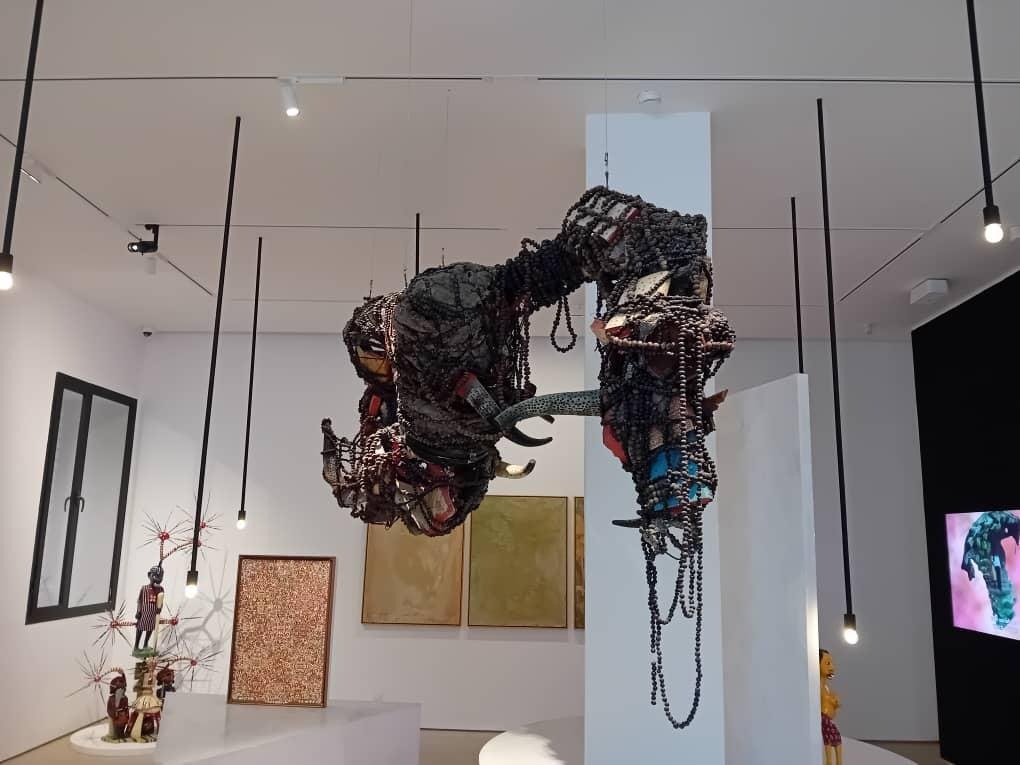
When confronted with a gargantuan multimedia piece hanging from the ceiling comprising bones and horns by the Zimbabwe artist – Takunda Regis Billiat, it takes a while to mobilize yourself again, recollect your thoughts and let alone put pen to paper in a coherent manner.
The arduous task of presenting the contours to CAA can only be mitigated if there is a consensus that it ought to be read in different ways, through diverse criteria and multiple perspectives.
A few examples will suffice.
In COHABIT there is a terse hint at the work of the artists who have recognized the serious threat to the ecosystem and therefore engage in providing an impetus to heal the precarious fragility of unstable ecosystems and other seismic zones.
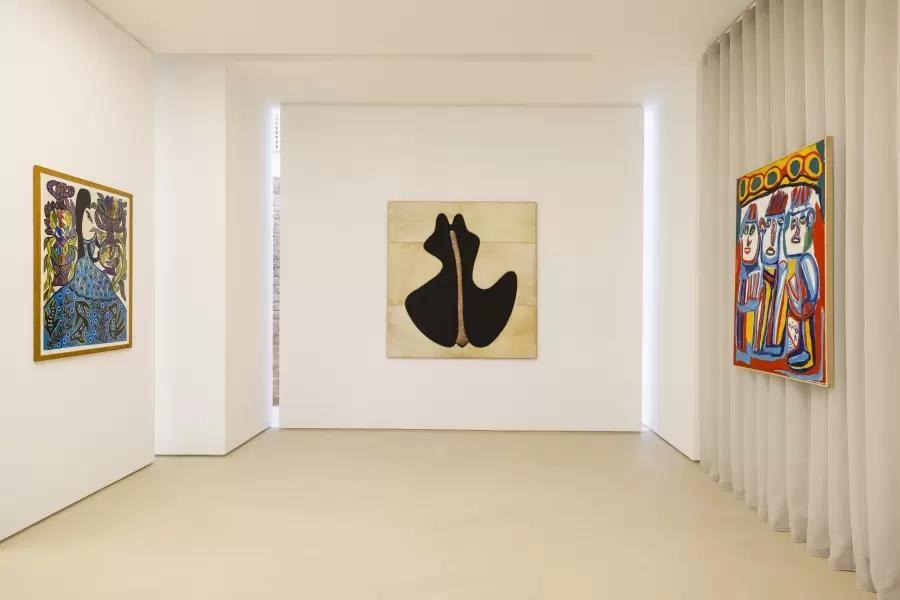
The artists whose work re-examines sacred and ritual knowledge in light of our contemporary condition are featured in INITIATE : Josèfa Ntjam, Btihal Remli, Maya-Inès Touam, Dominique Zinkpè and Kwame Akoto.
Are our artists also our initiators into alternative realities? Do some of these alternative realities beckon us towards progress and development for our vulnerable groups?
By the time we had slowly navigated through to the final room – CONNECT, the viewing of the multi media artist, Sammy Baloji’s video – Kasala: the Slaughterhouse of Dreams or the First Human, Bende’s Error, 2020, we were not far off from a catharsis.
We had gone through the multiple presentation chambers; some bathed in light; others, had eschewed the “white lighted cube” strategy and instead opted for dark walls with light illuminating the artwork from behind.
Heck, there was an Attuquaye Clottey yellow gallon piece laid out elegantly on a floor dais and it looked great; it even afforded a new dimension to his work.
All told there is serious work going on at the MACAAL; or as we say in GA or TWI – “they are not playing here!”, and this is the literal translation.
This year the MACAAL will celebrate its10th Anniversary and it has already categorically and emphatically cemented its place as a precious African gift to the world.
Long Live the MACAAL!!!
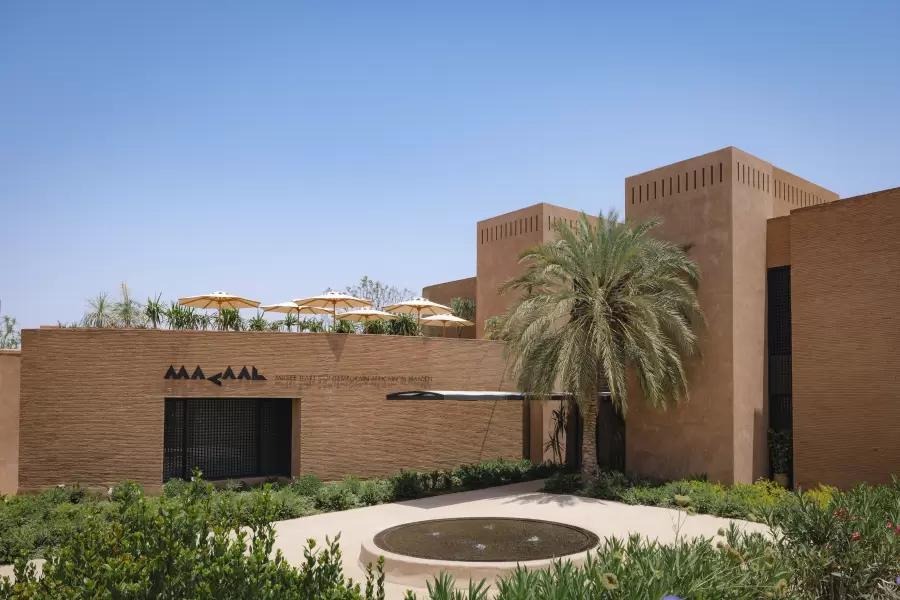
MACAAL
Museum of African Contemporary
Art Al Maaden, Marrakech
Al Maaden, Sidi Youssef Ben Ali, 40000 Marrakech